
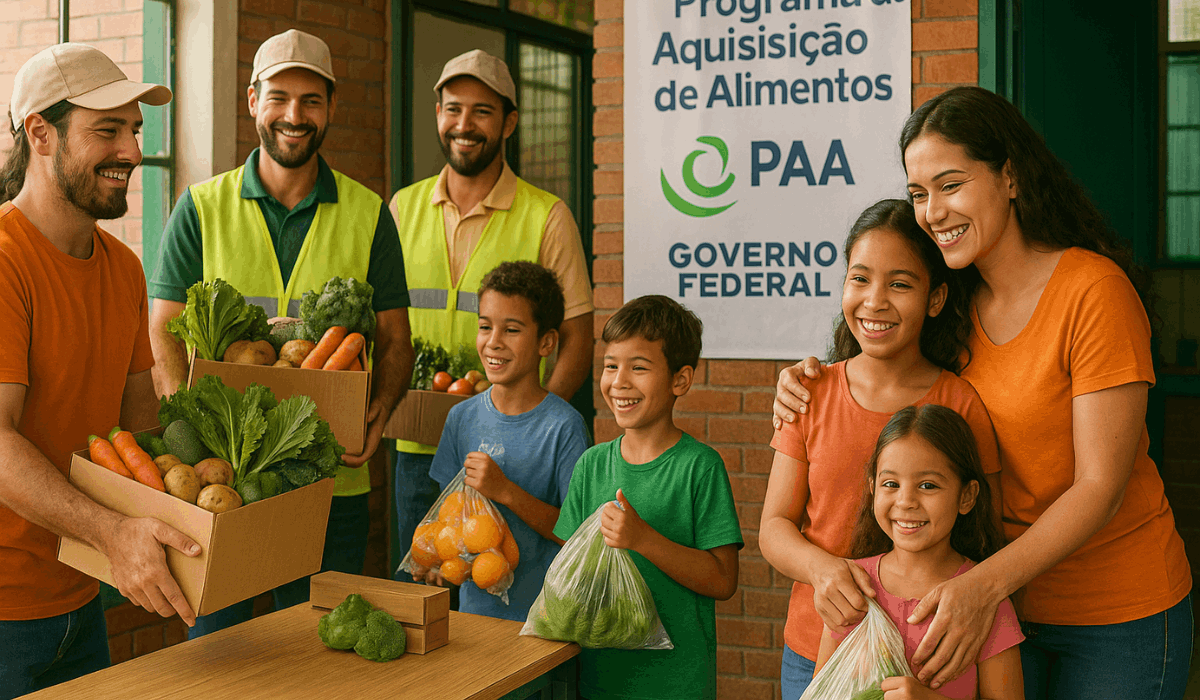
The Food Acquisition Program (PAA) is a Brazilian government initiative that supports family farmers and provides healthy food to vulnerable communities.
It connects small farmers directly with social institutions, reducing hunger and food waste across the country.
By promoting fair trade and sustainable production, the program plays a vital role in both rural development and food security.
What Is the PAA
The Food Acquisition Program (PAA) was created in 2003 by the Brazilian government to buy food directly from family farmers.
It distributes these products to schools, hospitals, and social programs that assist low-income families.
How the PAA Works
The PAA functions through organized systems that connect family farmers with social programs.
It ensures fair payment for producers while providing nutritious food to those in need.
- Direct Purchase: The government buys products directly from family farmers at fair prices.
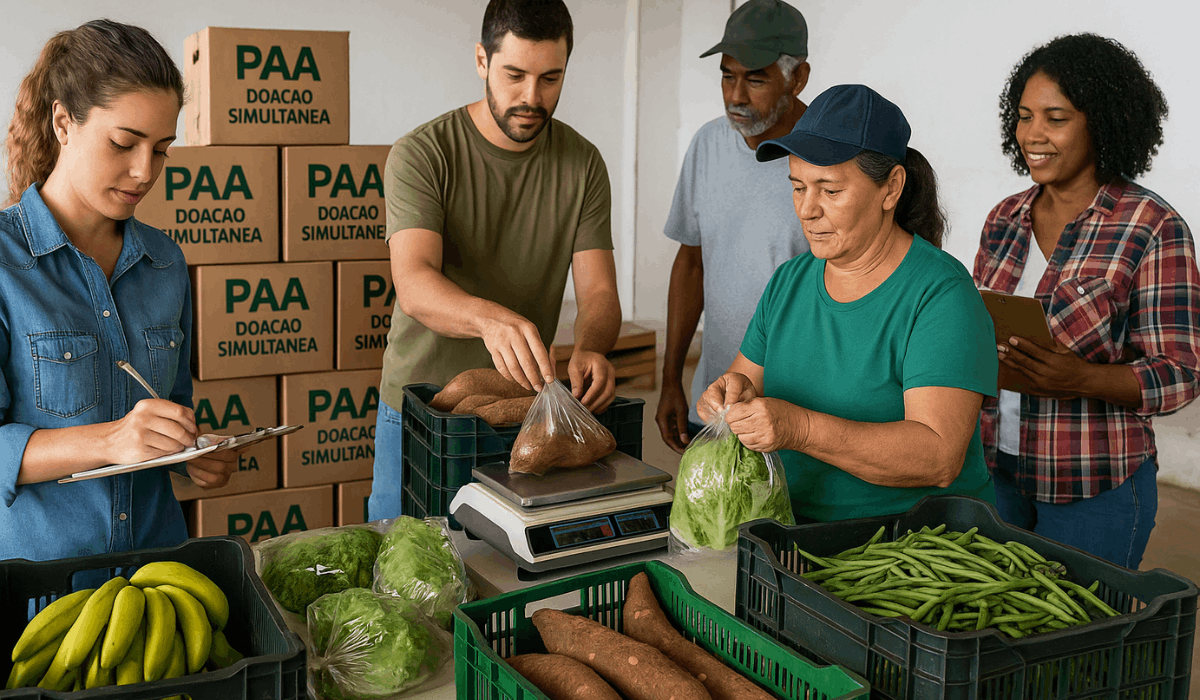
- Simultaneous Donation: Food purchased is donated to institutions like schools and food banks.
- Stock Formation: Farmers can store products for future distribution or emergencies.
- Local Partnerships: States and municipalities help manage logistics, payments, and distribution.
- Farmer Registration: Participants must be listed in the CAF (National Register of Family Farming) to qualify.
Main Program Modalities
The PAA offers several types of participation to meet different agricultural and social needs.
Each modality helps ensure that food is distributed fairly while strengthening local production networks.
- Purchase with Simultaneous Donation: The government buys food from family farmers and donates it to schools and community centers.
- Stock Formation: Farmers store products to guarantee food availability and price stability throughout the year.
- Direct Purchase: The government acquires food for public programs such as school meals and food banks.
- PAA Milk Program: Focused on supporting small dairy producers in the Northeast and Northern Minas Gerais, supplying milk to families in need.
- Institutional Purchase: Encourages public institutions to source directly from family farmers for their food supply needs.
Benefits for Family Farmers
The PAA provides direct advantages to family farmers, helping them grow economically and stay active in rural areas.
It promotes income stability, social inclusion, and sustainable agricultural practices.
- Stable Income: Guarantees fair payment and steady demand for local produce.
- Market Access: Opens new opportunities for small farmers to sell directly to the government.
- Empowerment of Women and Traditional Groups: Encourages participation of women, Indigenous people, and rural communities.
- Sustainable Production: Promotes environmentally responsible farming methods.
- Community Development: Strengthens local economies and social ties in rural areas.
Contribution to Food Security
The PAA provides direct advantages to family farmers, helping them grow economically and stay active in rural areas.
It promotes income stability, social inclusion, and sustainable agricultural practices.
- Stable Income: Guarantees fair payment and steady demand for local produce.
- Market Access: Opens new opportunities for small farmers to sell directly to the government.
- Empowerment of Women and Traditional Groups: Encourages participation of women, Indigenous people, and rural communities.
- Sustainable Production: Promotes environmentally responsible farming methods.
- Community Development: Strengthens local economies and social ties in rural areas.
Role of Cooperatives and Associations
Cooperatives and associations play a key role in helping small farmers participate effectively in the PAA.
They provide organization, support, and collective strength that individual producers often cannot achieve alone.
- Collective Organization: Cooperatives unite farmers, making it easier to meet program requirements and deliver products in larger quantities.
- Administrative Support: They handle paperwork, contracts, and logistics, reducing bureaucracy for individual members.
- Negotiation Power: Acting as a group allows farmers to negotiate better prices and conditions with government buyers.
- Training and Capacity Building: Cooperatives often provide technical assistance, improving production quality and management.
- Market Expansion: Through associations, farmers access new markets beyond the PAA, increasing visibility and long-term sustainability.
Economic and Social Impact
The PAA generates both economic gains and social benefits in rural and urban areas. It helps reduce inequality and strengthens local economies.
- Local Economic Growth: Public purchases inject money into rural communities.
- Job Creation: Farming, processing, and logistics generate new work opportunities.
- Rural Retention: More farmers stay in their communities instead of migrating.
- Social Inclusion: Small-scale producers access formal markets and services.
- Poverty Reduction: Income support helps vulnerable families improve living conditions.
Environmental and Sustainable Practices
The PAA encourages environmentally responsible farming methods that protect natural resources and promote long-term food production.
It supports farmers who use eco-friendly techniques and prioritize sustainability.
- Agroecological Production: Promotes the use of organic methods that reduce chemicals and preserve soil health.
- Local Sourcing: Encourages nearby food purchases, lowering transport emissions and supporting local markets.
- Biodiversity Protection: Supports the cultivation of native species and traditional crops.
- Water and Soil Conservation: Incentivizes sustainable irrigation and soil management practices.
- Climate Adaptation: Helps farmers adopt techniques that reduce vulnerability to droughts and extreme weather.
Challenges and Recent Improvements
The PAA faces operational challenges but has recently undergone reforms to improve efficiency and adapt to changing demands.
- Budget Constraints: Funding has been unstable, limiting the scale and consistency of operations.
- Slow Payments: Delays between purchase and payment harm farmers’ cash flow and trust.
- Bureaucratic Complexity: Excessive paperwork and administrative hurdles discourage participation.
- Logistics and Distribution Costs: Remote areas face high transport and storage challenges.
- Policy Disruptions: Changes in leadership or institutional frameworks affect program continuity.
How to Join the PAA
Joining the PAA is a simple process designed to include small farmers across Brazil.
It requires proper registration and participation through local partnerships and public calls.
- Register in the CAF: Farmers must be enrolled in the National Register of Family Farming (CAF) to qualify.
- Apply Online: You can start your registration or update your CAF information through the official government portal.
- Contact Local Authorities: Visit the Municipal Agriculture Office or EMATER for local support and guidance.
- Prepare Documentation: Gather personal identification, proof of land ownership or use, and production data.
- Join a Cooperative or Association: Group participation simplifies the process and strengthens approval chances.
- Participate in Public Calls: Apply when federal, state, or municipal agencies open calls for food supply through the PAA.
To Wrap Up
The Food Acquisition Program (PAA) remains essential for promoting food security and strengthening family farming in Brazil.
Connecting small producers to social programs fosters inclusion, sustainability, and local growth.
Support and monitor this initiative to ensure it continues improving lives and fighting hunger nationwide.