The National School Feeding Program (PNAE) provides free, nutritious meals to public school students across Brazil.
It promotes healthy eating habits, supports local agriculture, and ensures that every child has access to food during school hours.
Managed by the National Fund for Education Development (FNDE), the program is a key part of Brazil’s efforts to link education, nutrition, and social inclusion.
Understanding the PNAE
The National School Feeding Program (PNAE) began in the 1950s to fight hunger and support student learning in Brazil’s public schools.
Over time, it evolved to focus on food quality and equity, ensuring that all students receive nutritious meals regardless of their background.
Governed by Law No. 11.947/2009, the program is funded by the FNDE and locally managed by states and municipalities.
How the Program Works
The National School Feeding Program (PNAE) operates through a structured system that connects federal funding, local management, and nutritional planning.
Each stage is designed to ensure transparency, efficiency, and food quality. Here’s how the program works in practice:
Funding and Administration
- The federal government, through the FNDE, allocates funds to states and municipalities based on student enrollment.
- Local authorities handle menu planning, food purchasing, and logistics to meet regional needs.
- School Feeding Councils (CAE) monitor the program to ensure funds are appropriately used and meals meet standards.
Menu Planning and Nutrition Standards
- Qualified nutritionists design menus following national dietary guidelines.
- Schools prioritize fresh, local, and minimally processed foods to promote healthy eating.
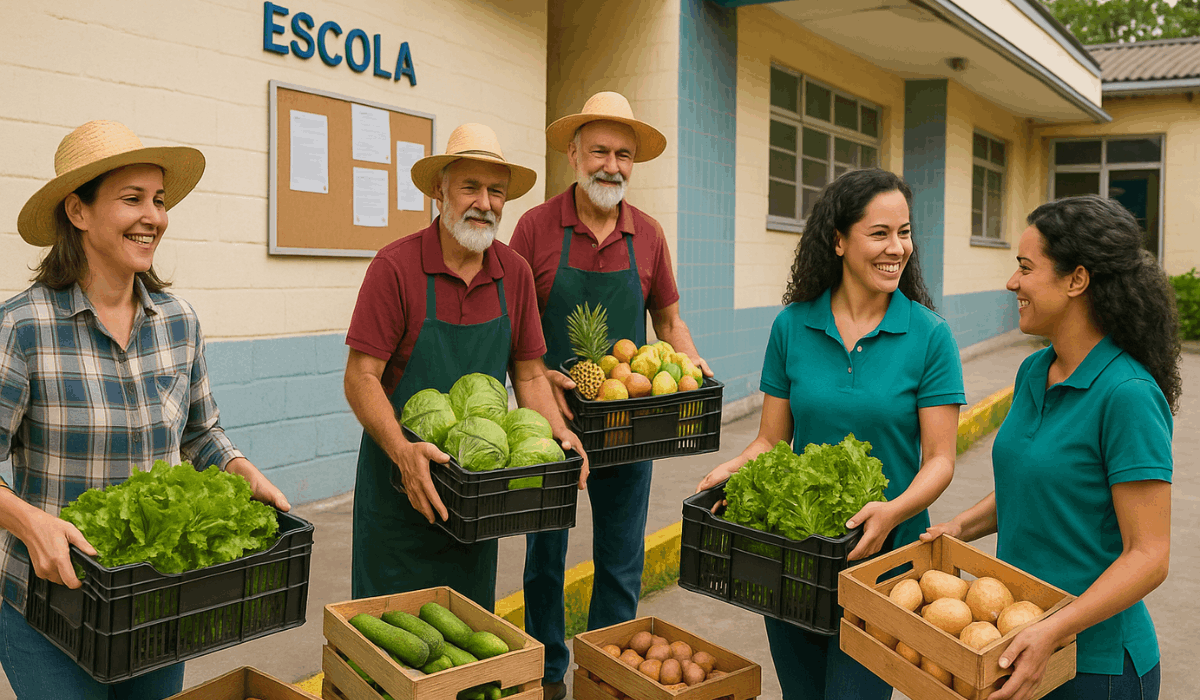
- At least 30% of ingredients must come from family farming, supporting local agriculture and sustainability.
Quality Control and Food Safety
- Regular inspections ensure meals are safe, nutritious, and meet hygiene requirements.
- Training programs help cafeteria staff maintain quality and prevent food waste.
- Nutrition education initiatives raise students' awareness of balanced diets.
Eligibility and Coverage
The PNAE guarantees free, nutritious meals for all students in Brazil’s public schools. It reaches millions of children and teenagers nationwide.
Here’s how the program defines eligibility and coverage:
Who Benefits
- All students enrolled in public basic education, from daycare to high school, receive free meals.
- The program also covers indigenous and quilombola communities, ensuring cultural and regional food inclusion.
- Students in full-time schools are prioritized for more frequent meals throughout the day.
Meal Frequency and Types
- The number of meals varies by school schedule — one for half-day classes and up to three for full-day schools.
- Meals include breakfast, lunch, and snacks, depending on the time students spend in school.
- Menus are adjusted to meet age-specific nutritional needs, ensuring balance and variety.
Food Education in Schools
The PNAE goes beyond providing meals — it also teaches students the importance of healthy eating.
Food education is integrated into daily school activities to build lifelong nutrition habits. Here’s how schools promote food awareness and participation:
Promoting Healthy Habits
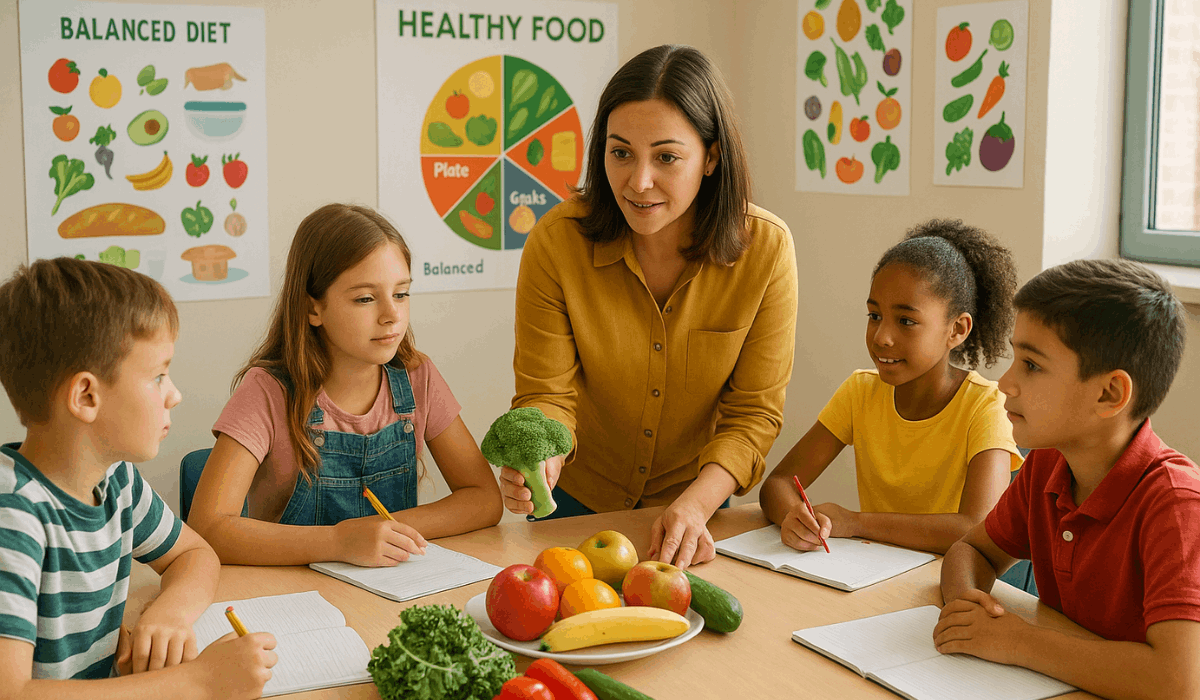
- Schools include nutrition education in their curriculum through lessons and projects.
- Students learn about balanced diets, hygiene, and the importance of local foods.
- Activities like school gardens and cooking workshops encourage hands-on learning.
Community Engagement
- Parents and teachers join workshops and events about healthy eating and food preparation.
- Schools organize campaigns to reduce food waste and promote sustainability.
- These actions strengthen the link between education, family, and community health.
Impact on Students and Communities
The program has a strong impact on both students and their local communities.
It not only improves children’s health and learning but also strengthens local economies. Here’s how the program creates lasting benefits:
Educational and Health Outcomes
- Regular access to nutritious meals helps improve school attendance and focus.
- Students show better academic performance and physical development.
- The program helps prevent malnutrition and obesity, promoting balanced diets.
Strengthening Local Economies
- At least 30% of food purchases come from family farming, supporting small producers.
- Local food sourcing stimulates rural economies and encourages sustainable practices.
- The program fosters a connection between schools and local farmers, ensuring community participation.
Challenges and Improvements
Despite its success, the PNAE still faces operational and logistical challenges.
However, continuous improvements aim to make the program more efficient, transparent, and accessible.
Below are the main challenges and recent updates:
Persistent Challenges
- Delays in fund transfers can affect meal preparation and supply schedules.
- Some regions struggle with infrastructure and logistics, especially in remote rural areas.
- Limited supplier organization can reduce product variety and freshness.
Recent Improvements
- Implementation of digital management systems to monitor funds and food quality.
- Expansion of nutrition education programs for students and staff.
- Strengthened oversight and audits to increase transparency and prevent irregularities.
Transparency and Citizen Participation
The program promotes transparency and community participation to ensure proper use of resources.
Families, educators, and citizens help monitor meal quality, funding, and distribution. Here’s how public oversight functions in the program:
Oversight and Monitoring
- School Feeding Councils (CAE), made up of parents, teachers, and community members, monitor PNAE operations.
- Councils verify food quality, hygiene, and fund usage in each school.
- Reports and evaluations are sent to the FNDE to ensure compliance and accountability.
Role of Families and the Community
- Parents can report issues or irregularities directly to school councils or local authorities.
- Schools promote meetings and open discussions to improve meal quality and local engagement.
- Public access to FNDE transparency portals allows citizens to track funding and program data in real time.
Future Goals and Innovations
The PNAE is advancing with new goals to boost efficiency, sustainability, and access.
These actions aim to expand its long-term impact on education and nutrition. Here are its main future priorities:
Expanding Access
- Plans to extend meal coverage for full-time schools and rural areas.
- Inclusion of more indigenous and quilombola communities through tailored nutrition programs.
- Use of digital tools to improve fund tracking, menu planning, and delivery logistics.
Promoting Sustainability
- Encouraging organic and agroecological farming to supply school meals.
- Reducing food waste through better storage, distribution, and education campaigns.
- Promoting environmentally responsible practices across the supply chain.
Strengthening Partnerships
- Expanding collaboration with universities, NGOs, and nutrition institutes for research and innovation.
- Developing new training programs for school staff and local farmers.
- Enhancing integration with other public health and education initiatives to broaden social impact.
Conclusion – Nourishing Education and Equality
The National School Feeding Program (PNAE) remains vital in improving education, nutrition, and social equality across Brazil.
Its success depends on continued transparency, local participation, and investment in innovation.
You can support the program by staying informed, participating in School Feeding Councils (CAE), and promoting healthy eating in your community.