
The Criança Feliz program is a national initiative that guides families in promoting their children’s early development.
It offers home visits, counseling, and practical activities to strengthen emotional bonds between parents and children.
Through this approach, the program supports healthy growth and helps reduce social inequality across Brazil.
Historical Background
The Criança Feliz program was launched in 2016 by the Brazilian federal government under the Ministry of Social Development.
It was created to promote integrated early childhood care for families in vulnerable situations, especially those in CadÚnico.
Since its creation, the program has expanded nationwide, becoming one of Brazil’s key public policies for early childhood development.
Program Overview
The Criança Feliz program provides structured support to families during early childhood, focusing on health, education, and emotional development.
Below is a clear overview of its main components and how it operates across Brazil.
- Managing Body: Supervised by the Ministry of Social Development and Assistance, Family and Fight Against Hunger.
- Target Group: Pregnant women, children up to 6 years old, and families registered in CadÚnico or receiving Bolsa Família.
- Main Strategy: Regular home visits conducted by trained professionals to guide parents and caregivers.
- Key Focus Areas: Early stimulation, nutrition, hygiene, and emotional bonding between parents and children.
- Implementation: Coordinated through CRAS (Social Assistance Reference Centers) with local health and education networks.
- Coverage: Present in thousands of municipalities across all Brazilian states, reaching millions of families.
- Approach: Promotes intersectoral collaboration between social, educational, and health services for comprehensive child development.
Objectives of the Program
The program was designed with clear objectives that guide its mission to improve early childhood care in Brazil.
These goals aim to strengthen families, promote child development, and reduce inequality through integrated social support.
- Promote early childhood development by encouraging cognitive, emotional, and social growth in children.
- Strengthen family bonds through positive parenting practices and caregiver involvement.
- Support pregnant women with guidance on prenatal care, nutrition, and emotional well-being.
- Reduce social inequality by prioritizing families in vulnerable situations registered in CadÚnico.
- Encourage access to public services in health, education, and social assistance.
- Foster intersectoral coordination between different government sectors to enhance the effectiveness of child support.
- Prevent developmental delays through early stimulation and consistent family follow-up.
How It Works
The Criança Feliz program operates through a coordinated system of home visits and social support.
Its goal is to help families support their children’s development through simple, practical methods. Below is how the program works.
- Home Visits: Trained professionals visit families weekly or biweekly to offer guidance on child care, learning, and family interaction.
- Trained Visitors: Social agents receive continuous training to ensure quality and consistency in visits.
- Educational Activities: Visits include games, reading, and play-based activities that stimulate learning and emotional bonding.
- Health and Nutrition Guidance: Families receive advice on hygiene, breastfeeding, nutrition, and child safety.
- Family Counseling: Caregivers are supported in improving communication, affection, and emotional stability at home.
- Integration with Public Services: Families are connected to health clinics, schools, and social programs through CRAS.
- Monitoring and Evaluation: Local teams track children’s progress and adjust visit plans based on individual needs.
Eligibility and Registration
To take part in the Criança Feliz program, families must go through a simple registration process.
It ensures that only eligible households receive support and home visits. Here’s how you can register step by step.
- Check Eligibility: You must have a pregnant woman or a child under 6 years old in the family.
- Be in CadÚnico: Ensure your household is registered in the Unified Registry for Social Programs (CadÚnico).
- Register Online (Optional): You can pre-register using the Meu CadÚnico app or the CadÚnico online portal to confirm your family details.
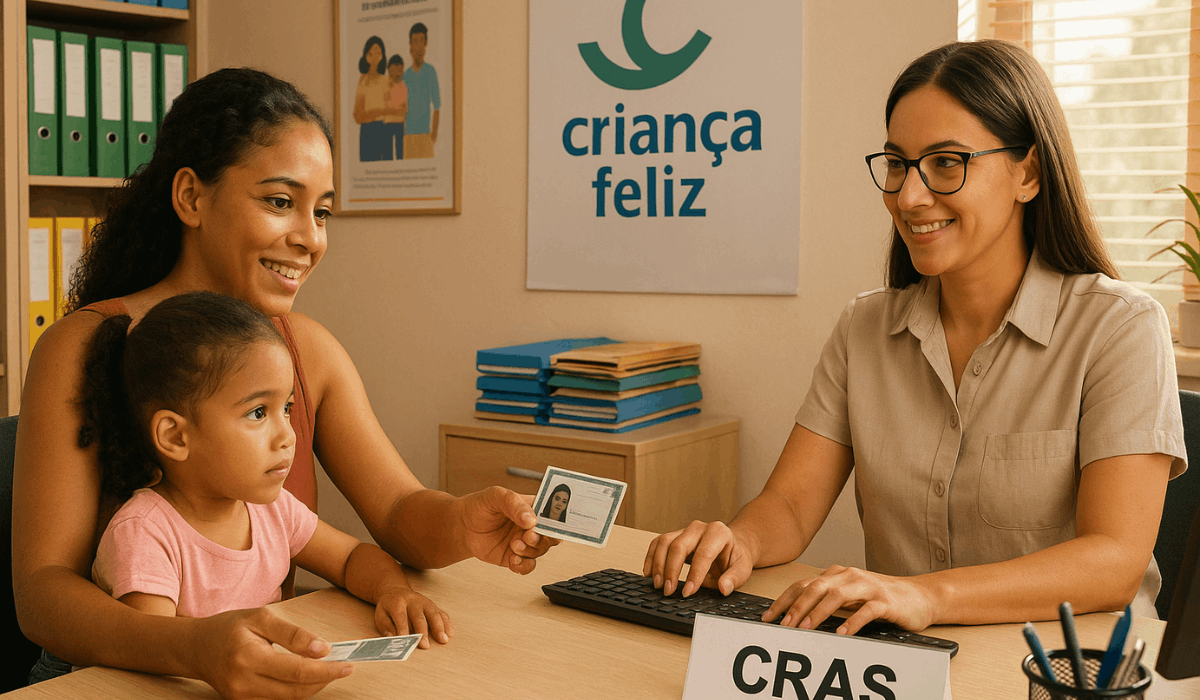
- Visit CRAS: Go to the nearest Social Assistance Reference Center (CRAS) for in-person confirmation.
- Bring Documents: Take your ID, proof of address, and NIS (Social Identification Number).
- Interview and Verification: A social worker will review your data and confirm your eligibility.
- Enrollment Confirmation: Once approved, your family is officially added to the Criança Feliz program.
- Home Visit Scheduling: A program representative will contact you to arrange your first visit.
Training of Home Visitors
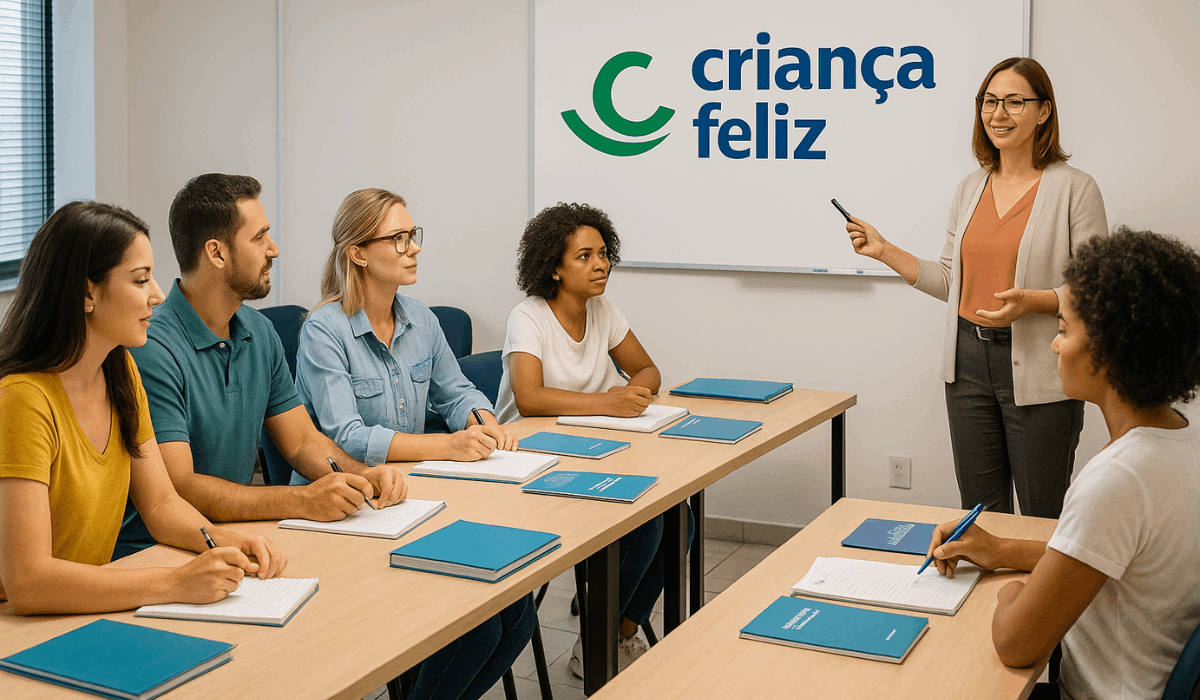
The Criança Feliz program relies on trained home visitors who guide families directly.
They receive ongoing instruction to keep visits effective and consistent. Here’s how their training works.
- Selection Process: Visitors are chosen based on their background in social work, education, or community service.
- Initial Training: Before starting, they complete courses on early childhood development, family guidance, and child rights.
- Practical Workshops: Training includes simulated visits, case studies, and demonstrations on child interaction.
- Ongoing Education: Visitors regularly attend refresher courses to stay updated on new child development techniques.
- Technical Supervision: Each visitor works under the supervision of a coordinator who monitors visit quality and consistency.
- Emotional Support: Programs also provide counseling and team meetings to help visitors handle sensitive family situations.
- Standardized Guidelines: All training follows national manuals and protocols to maintain program quality across Brazil.
Benefits and Impact
The Criança Feliz program has made a strong impact on families and communities across Brazil.
It improves child development, strengthens family relationships, and connects households to essential public services.
Here are the main benefits and results observed.
- Improved Child Development: Children show better cognitive, emotional, and social growth through early stimulation and family engagement.
- Support for Pregnant Women: Mothers receive guidance on prenatal care, nutrition, and emotional health during pregnancy.
- Stronger Family Bonds: Regular visits help parents understand their child’s needs and build closer relationships.
- Health and Nutrition Gains: Families adopt healthier habits, improving hygiene, breastfeeding, and diet practices.
- Educational Readiness: Children enter preschool with stronger learning and communication skills.
- Reduced Inequality: Vulnerable families gain access to social programs, healthcare, and education through CRAS referrals.
- Community Integration: The program strengthens local support networks by linking families to public institutions.
- Nationwide Reach: Thousands of municipalities participate, serving millions of families since its launch.
Monitoring and Evaluation
The program uses a monitoring system to track progress and ensure quality.
Data is collected regularly to assess child development and program results. Here are its main components.
- Data Collection: Home visitors record details from each family visit, including attendance, child progress, and activities performed.
- Digital Tracking: Information is entered into national databases that allow real-time monitoring by municipal and federal teams.
- Performance Indicators: The program uses specific indicators, such as child health, education access, and family engagement levels.
- Quality Assessments: Supervisors review visit reports and provide feedback to ensure consistency across municipalities.
- Impact Studies: Periodic evaluations measure long-term results in early childhood development and social inclusion.
- Community Feedback: Families are encouraged to share their opinions to improve future visits and local coordination.
- Transparency: Results are shared with local governments to promote accountability and guide funding decisions.
To Conclude
The Criança Feliz program plays a vital role in improving early childhood care and strengthening family bonds.
Through education and regular support, it gives families the tools to raise healthier, happier children.
To take part, visit your nearest CRAS or register online through the Meu CadÚnico app today.